
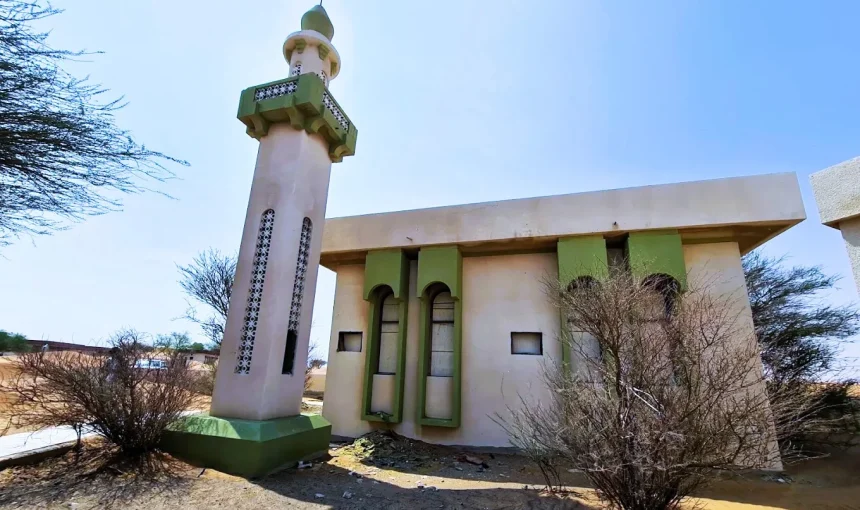
Al Madam is an inland town in the Central Region of the Emirate of Sharjah, about an hour’s drive (around 60 km) southeast of Dubai, where the Dubai Hatta Road (E44) meets the Mleiha to Al Shuwaib road (E55). It is best known for the Al Madam buried village, a row of abandoned houses and a small mosque slowly being swallowed by orange sand dunes. The houses were built in the 1970s as public housing for a Bedouin tribe and were empty by the mid 1990s. Entry is free, there are no gates, and the site is close to Fossil Rock, Mleiha and the Big Red dunes of Al Badayer, which makes Al Madam one of the easiest desert day trips from Dubai and Sharjah.
Planning your Next trip? Let White Sky handle it.
We book your flights, hotels and transfers, with the option to pay later with Tabby, Tamara or UAE credit card monthly instalments.
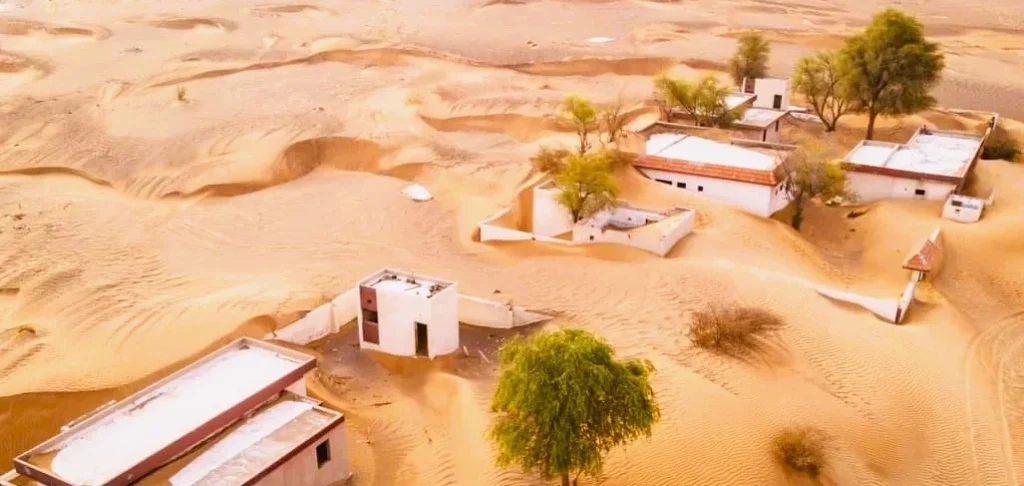
Table of Contents
What is Al Madam?
Al Madam is a small, quiet town and the centre of its own municipality in Sharjah. Its main street has shops, a shopping mall, a medical centre, petrol stations and a public park, so it works well as a stop for fuel, water and restrooms before you head into the desert. Many people pass through Al Madam on the way to Hatta, Mleiha or the dune bashing areas of Al Badayer.
A common misconception is that Al Madam is a resort with guided paths and visitor centres. It isn’t. The buried village is an open, unmanaged site with no staff, no shade and no facilities, so plan your visit carefully.
Good to know: the short stretch of the E44 between Al Madam and Hatta passes through Omani territory and is only open to UAE and Omani nationals and permit holders. Other drivers heading to Hatta should use the route through Dubai, and it is wise to check the current rules before you travel.
The Al Madam buried village and its history
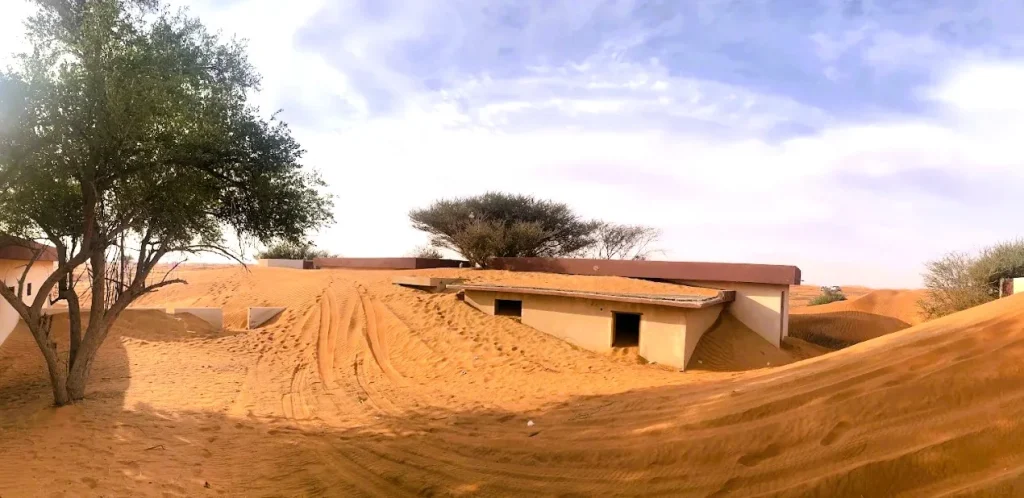
The buried village, officially known as Shaabiyat Al Ghurayfah, sits in the desert just south of Al Madam town. According to Visit Sharjah, the official tourism website of the emirate, the houses were built as part of a public housing project after the formation of the UAE in 1971, for members of a Bedouin tribe who had lived a semi nomadic life. Around twenty years later the residents had all left, mainly because of strong desert winds, drifting sand and long commutes. Families moved to newer housing nearby and the dunes slowly took over.
Today you can walk between rows of single storey houses with colourful painted walls, tiled floors and rooms half filled with sand. The small mosque with its short minaret is the most photographed building. Local stories say the village is haunted by a jinn, but these are folk tales; the real reason it was left empty is the sand.
The village has also become a cultural spot. It was one of the venues of Sharjah Biennial 16 in 2025, with a sound installation by composer Raven Chacon playing recorded voices through the empty houses, and the Sharjah Art Foundation has since hosted sketching tours and sunset photography walks there.
Where is the Al Madam buried village and how to get there
Address: Al Madam Buried Village, off the Al Madam to Al Shuwaib Road (E55), south of Al Madam Roundabout, Al Madam, Sharjah, UAE.
- From Dubai, drive east on the E44 Dubai Hatta Road past Al Faqa and the Al Badayer dunes toward Al Madam.
- From Sharjah city, take the E88 to Al Dhaid, then follow the E55 south through Mleiha to Al Madam.
- Stop in Al Madam town to buy water and use the restrooms, as the village has no facilities.
- At Al Madam Roundabout, take the E55 south toward Al Shuwaib. After a few kilometres the first buried houses and the mosque appear on the side of the road.
- Park on firm ground near the road. A normal car is fine for the edge of the village; you only need a four wheel drive to go deeper into the soft dunes.
- If you drive a four wheel drive onto the sand, lower your tyre pressure first and reinflate as soon as you are back on tarmac.
The single judgment call is reading the sand: if it looks soft and deep, stop and walk instead of driving.
Al Madam trip planner at a glance
These figures assume a winter visit starting from central Dubai.
| Situation | What to use | How long | What to watch for |
|---|---|---|---|
| Driving from Dubai | Car or four wheel drive | About 1 hour | Speed cameras on the E44 |
| Driving from Sharjah city | Car or four wheel drive | About 1 hour 15 minutes | Trucks on the E88 and E55 |
| Walking the ruins | Sturdy closed shoes | 1 to 2 hours | Unstable roofs and walls |
| Summer visits | Early morning only | Leave Dubai by 6 AM | Heat above 45°C with no shade |
| Winter visits | Mid morning or late afternoon | 3 to 4 hours in total | Rain can turn sand into mud |
| Stop in Al Madam town | Any car | About 30 minutes | Buy water before leaving town |
Best time to visit and photo tips
The best months to visit Al Madam are November to March, when days are mild and walking on the sand is comfortable. In summer, go only at sunrise.
For photos, arrive about two hours before sunset. The low, warm light shows the texture of the dunes pressing against the walls, while midday sun washes out the colours and creates harsh shadows inside the rooms. Drones may need a permit in the UAE, so check the current rules before flying one.

Don’t climb on the roofs of the buried houses. A roof that looks solid can crack under one person’s weight. Stay on the ground floor where the sand supports the structure.
Sand problems and fixes
Things can go wrong quickly when you leave the paved road. Here is what usually happens and what to do before calling for help.
| What you notice | What it usually means | What to do first |
|---|---|---|
| Steering feels heavy | Front tyres sinking in soft sand | Stop, then reverse straight back on your own tracks |
| Engine temperature rises | Sand blocking the radiator airflow | Stop the vehicle and clear sand from the grille |
| Wheels spin freely | Too much tyre pressure or too much throttle | Ease off, lower the pressure a little and use gentle throttle |
| Deep rut ahead | Another vehicle got stuck here | Drive around it, never through it |
Rules for driving in the desert
Always carry your Emirates ID or passport and your driving licence. Drive slowly, stay on existing tracks and never drive alone into deep dunes.
If your vehicle gets deeply stuck or rolls over, don’t try to dig it out in extreme heat. Call 999, stay with the vehicle and wait in the shade. Recovering a car from deep sand needs special equipment that regular tow trucks don’t carry.
Places to visit near Al Madam
Al Madam sits in the middle of Sharjah’s desert region, so it is easy to combine the buried village with other stops on the same day:
- Fossil Rock: a limestone mountain near Mleiha, about 20 minutes away, known for marine fossils, a hiking trail and desert views.
- Mleiha Archaeological Centre: a museum and archaeological site that tells the story of people living in this area for thousands of years. It is part of Mleiha National Park.
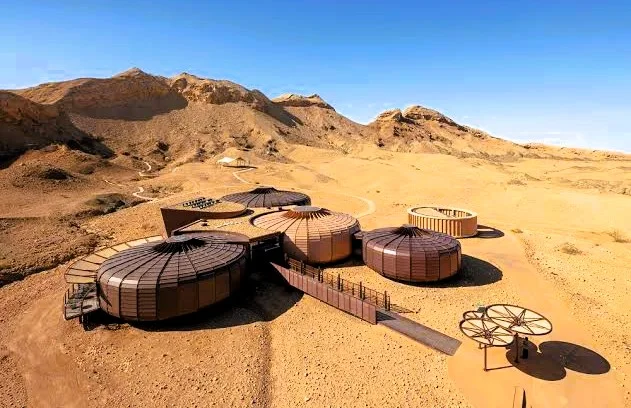
- Buhais Geology Park: a modern park between Al Madam and Mleiha with fossil exhibits, walking trails and striking pods inspired by fossilised sea urchins, set at the foot of Jebel Buhais.
- Al Badayer: home of the Big Red dunes on the E44, popular for dune bashing, quad biking and sandboarding. The Sharjah Kart Track is also on this stretch of the E44 if you fancy a few laps.
- Jebel Faya: a rocky ridge near Mleiha with ancient sites and wide views of the desert.
- Fili Fort: a 19th century fort and old village east of Al Madam, a short detour for history lovers.
- Al Dhaid Fort: a historic fort in the farming town of Al Dhaid, on the way back to Sharjah city. Sharjah Safari is also in the Al Dhaid area.
- Hatta Hill Park and the Hatta mountains: a cooler mountain escape further along the Dubai Hatta Road (check the route rules above).
Hotels and resorts near Al Madam
There are no big hotels in Al Madam town itself, but some of Sharjah’s best desert retreats are close by:
- Al Badayer Retreat by Sharjah Collection: a desert hotel built like a traditional fort, with pool villas and dune views, a short drive from Al Madam.
- Mysk Moon Retreat: a newer desert retreat in Mleiha by Shurooq, designed for stargazing and quiet nights in the dunes.
- Al Faya Retreat by Sharjah Collection: a small boutique lodge in the Mleiha desert, ideal for couples.
- Mleiha glamping: tents and camps in Mleiha National Park, available in the cooler season.
- Hotels in Dubai or Sharjah city: many visitors stay in the city and do Al Madam as a day trip.
White Sky can book your stay at desert retreats and city hotels, plus private transfers to Al Madam. You can pay later with Tabby, Tamara or UAE credit card installments for up to 12 months. Message us on WhatsApp at +971 4 220 2133 for a quote.
When to skip it
This trip isn’t for everyone. If you dislike heat, don’t have a car or prefer organised activities with facilities, Al Madam may disappoint. In that case, a private desert safari or a night at a desert retreat gives you the dunes with more comfort.
The buried village is a free public area, so there are no tickets to book. White Sky Travel and Tourism can still help with flights, hotels and transfers for your Sharjah trip. Message us on WhatsApp at +971 4 220 2133.
Frequently asked questions
Where is Al Madam?
Al Madam is a town in the Central Region of the Emirate of Sharjah, UAE, about 60 km southeast of Dubai. It sits where the Dubai Hatta Road (E44) meets the Mleiha to Al Shuwaib road (E55). It is in Sharjah, not Dubai.
What is the Al Madam buried village?
It is an abandoned housing project, officially called Shaabiyat Al Ghurayfah, just south of Al Madam town. Its houses and small mosque are slowly being buried by sand dunes, which makes it a popular spot for photography and exploring.
Why was the Al Madam village abandoned?
The houses were built in the 1970s for a Bedouin tribe. Around twenty years later the residents had moved to newer housing nearby, mainly because of strong winds, drifting sand and long commutes.
What is the address of the Al Madam buried village?
Al Madam Buried Village, off the Al Madam to Al Shuwaib Road (E55), south of Al Madam Roundabout, Al Madam, Sharjah, UAE.
Is there an entrance fee for the Al Madam buried village?
No. It is an open, unmanaged area with no gates or tickets. Visit in daylight, as there is no lighting or staff on site.
Can I visit Al Madam in a normal car?
Yes. You can park a normal car on firm ground near the road and walk to the houses. A four wheel drive is only needed if you want to drive deeper into the soft dunes.
How long does it take to drive from Dubai to Al Madam?

About one hour from central Dubai via the E44 Dubai Hatta Road, depending on traffic. From Sharjah city it takes about one hour and fifteen minutes via Al Dhaid.
What is the best time to visit Al Madam?
November to March is the best season. Arrive in the morning or about two hours before sunset for the best light and cooler temperatures. In summer, visit only at sunrise.
Is the Al Madam buried village safe to visit?
Yes, if you are careful. Stay on the ground floor, do not climb on roofs or weak walls, carry plenty of water and avoid the midday heat. There are no toilets, shops or shade at the site.
Is the Al Madam buried village haunted?
Local stories talk about a jinn, but there is no evidence of anything supernatural. The village was left empty because of the sand and harsh desert conditions.
What else can I see near Al Madam?
Nearby places include the Buhais Geology Park, Fossil Rock, Mleiha Archaeological Centre, Jebel Faya, the Big Red dunes and kart track at Al Badayer, Fili Fort, Al Dhaid Fort and the Hatta mountains.
Where can I stay near Al Madam?
Popular options include Al Badayer Retreat, Mysk Moon Retreat and Al Faya Retreat by Sharjah Collection, plus glamping in Mleiha. Many visitors also stay in Dubai or Sharjah city and visit as a day trip.
Can White Sky help me plan a trip to Al Madam?
Yes. White Sky Travel and Tourism books flights, hotels, desert retreats and private transfers, with the option to pay later using Tabby, Tamara or UAE credit card installments for up to 12 months. Message us on WhatsApp at +971 4 220 2133.
Conclusion
Al Madam is more than a stop on the road to Hatta. Its buried village is one of the most unusual sights in the UAE, it costs nothing to visit and it sits close to Fossil Rock, Mleiha and the Big Red dunes. Go in the cooler months, bring water, stay off the roofs and time your visit for the golden light before sunset.
White Sky Travel and Tourism makes planning your Sharjah desert trip simple, from flights and hotels to desert retreats and private transfers. Spread the cost with Tabby, Tamara or any UAE credit card for up to 12 months. Send us a message on WhatsApp at +971 4 220 2133 to get your quote today.
Enjoying our content? Make us a preferred source on Google.
Add us as a Preferred Source on Google


