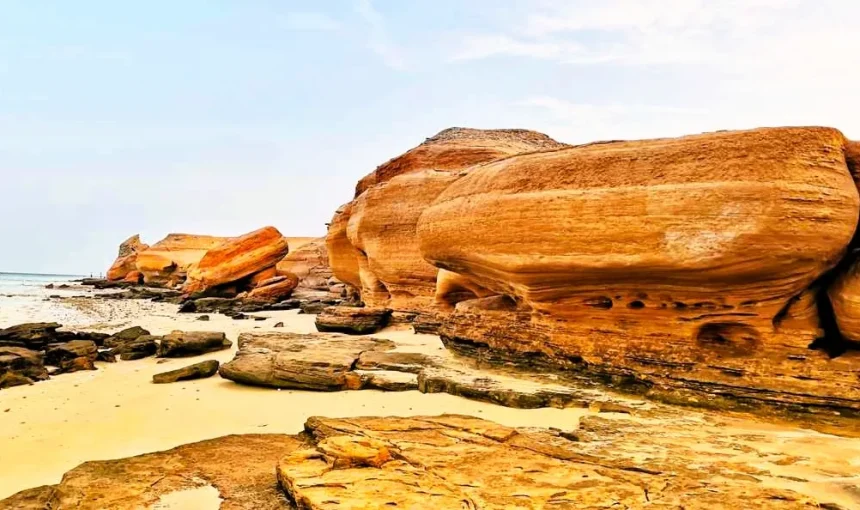
Shuweihat Island is a small island on the far western coast of Abu Dhabi, just past Al Ruwais in the Al Dhafra region and about 2.5 hours’ drive from Abu Dhabi city. It is best known for its striking red, orange and yellow rock formations, hidden coves and clear turquoise water, which make it one of the most photographed coastal landscapes in the UAE. The island is also home to the Shuweihat power and water complex (the S1, S2, S3 and S4 plants) and borders restricted government and private land, so it has been fenced off in recent years and is now closed to the public. Shuweihat is a known fossil site from the Late Miocene too. This guide covers its landscape, history, current access rules, how to get there, and the best beaches, islands, hotels and food spots nearby.
Planning your Next trip? Let White Sky handle it.
We book your attraction tickets and tours, with the option to pay later with Tabby, Tamara or UAE credit card monthly instalments.
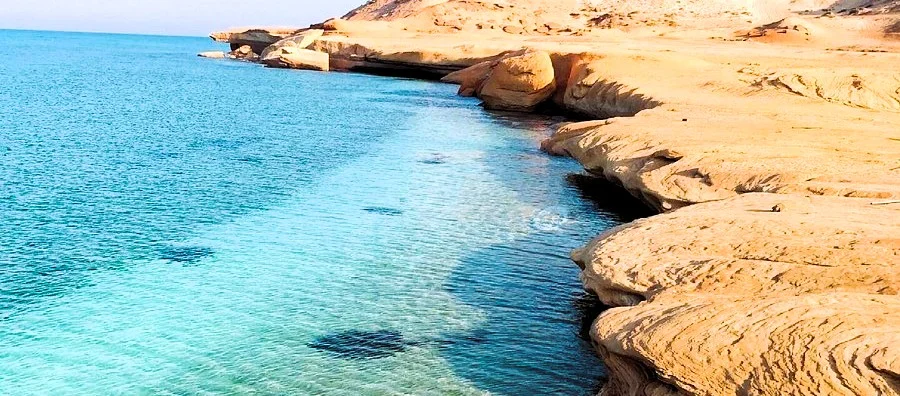
Table of Contents
Shuweihat Island industrial role
Part of the island is a hub for large scale utility production. The Shuweihat complex turns natural gas into electricity and turns seawater into fresh drinking water for homes across Abu Dhabi. The complex is changing as the emirate moves to cleaner energy: older gas powered desalination at S1 is being retired, while the newer S4 plant uses reverse osmosis to clean seawater with much less energy. Because these plants are vital for national security and daily life, the government keeps strict access controls around the entire industrial site.
| Plant | Type | Approximate capacity | In service since |
|---|---|---|---|
| Shuweihat S1 | Gas fired power (desalination being retired) | About 1,500 MW today, reconfigured to up to 1,100 MW of reserve power | 2005 |
| Shuweihat S2 | Power and seawater desalination | About 1,500 MW and about 455,000 cubic metres of water a day | 2011 |
| Shuweihat S3 | Gas fired combined cycle power | About 1,600 MW | 2014 |
| Shuweihat S4 | Reverse osmosis desalination | Up to about 318,000 cubic metres of water a day | Scheduled for 2026 |
According to Siemens, which built the Shuweihat S3 plant, S3 added 1,600 MW to help power the growing population and industry of the western region. Under a new agreement signed in April 2025, S1 will stop producing water and run as a flexible reserve power plant from 2027 for another 15 years. Capacities above are approximate and may change as plants are upgraded.
A fossil site from the Late Miocene
Long before the power plants, Shuweihat was part of a river landscape. The rocks here belong to the Baynunah Formation, which dates back 6 to 8 million years. Khaleej Times reported that fossil bones found at Shuweihat helped scientists identify a new extinct hippo relative, Archaeopotamus qeshta. Other Baynunah sites in Al Dhafra have revealed ancient elephants, crocodiles and antelopes, showing that this desert was once green and full of wildlife.
Is Shuweihat Island open to visitors?
No. Shuweihat Island is currently closed to the public. In recent years the island, including its best known rock viewpoints, has been fenced off because the island borders the power complex and other restricted government and private land. Signs in the area also forbid camping. The Ruwais community guide also lists the island as closed to the public, so do not try to enter and always respect fences, checkpoints and warning signs in the area.
The island became famous for the rock itself. Low cliffs and boulders in bands of red, orange and yellow line the shore, shaped by wind, rain and waves into rounded, mushroom like forms, small sea caves and sheltered coves. There are no toilets, shops, shade or lifeguards on the island, and photography of any industrial or military installation is not allowed, anywhere in the area.
Where is Shuweihat Island?
Shuweihat sits on the Arabian Gulf coast west of the industrial town of Al Ruwais, between Ruwais and Al Sila, and is joined to the mainland by a paved causeway. From Abu Dhabi city, drive west on the E11 past Mirfa and Ruwais, which takes about 2.5 hours, or about 3.5 to 4 hours from Dubai. Ruwais is the last town for fuel, food and toilets. Visit Abu Dhabi describes Al Dhafra as the emirate’s western region, known for its desert, islands and quiet coastline.
Tips for visiting Shuweihat Island
If you plan a drive to the Shuweihat area, go prepared and stay on public roads. These tips help you keep the trip safe and easy.
- Do not try to enter Shuweihat Island, as it is closed to the public; plan your day around Ruwais, Jebel Dhanna and Sir Bani Yas instead.
- Fill up on fuel, water and snacks in Ruwais, as there are no facilities on Shuweihat.
- Stay off the salt flats (sabkha) next to the road, as they look firm but can trap a car.
- Bring shade, sun protection and plenty of water, and visit early in the morning or before sunset for cooler temperatures.
- Respect all fences and signs, do not camp where it is forbidden, and never photograph military or industrial sites.
- Take all your rubbish home to help protect this fragile coastline.
- Contact White Sky Travel and Tourism on WhatsApp at +971 4 220 2133 for flights, hotels and transfers for your Al Dhafra trip.

Places to visit near Shuweihat Island
The coast around Shuweihat is one of the quietest parts of the UAE. Here are the best places to add to your trip.
Jebel Dhanna Beach
Just a short drive from Shuweihat, Jebel Dhanna has some of the clearest water in Abu Dhabi, soft sand and a peaceful resort strip. It is also the jetty point for boats to Sir Bani Yas Island. See more sandy spots in our guide to the beaches of Abu Dhabi.
Sir Bani Yas Island
This protected nature reserve sits about 8 km off the coast and is reached by a short water taxi from Jebel Dhanna. It is home to the Arabian Wildlife Park with free roaming Arabian oryx, gazelles and giraffes, plus nature drives, kayaking and an ancient Christian monastery site. Read our full guide to Sir Bani Yas Island.
Dalma Island
Dalma Island (also spelt Delma) is a historic pearling hub with old mosques, a small museum and traditional houses. A public car ferry runs from Jebel Dhanna Port and takes about 40 minutes on the newer vessels, which also carry cars, so it makes an easy day trip.
Mirfa Beach
On the way from Abu Dhabi, the coastal town of Al Mirfa has a calm public beach and a long corniche, and its beach has hosted the Al Dhafra Water Festival with dhow races and water sports. It is a nice stop to break up the drive.
Liwa Oasis and Moreeb Dune
If you have an extra day, head inland to Liwa Oasis to see date farms and Moreeb Dune, one of the tallest sand dunes in the world. Love the desert? Explore Al Khatim Desert closer to Abu Dhabi city too.
Hotels and resorts near Shuweihat Island
There are no hotels on Shuweihat, but there are lovely stays a short drive away.
- Danat Jebel Dhanna Resort: a beachfront resort with pools, a private beach and family friendly facilities.
- Dhafra Beach Hotel: a relaxed beach hotel at Jebel Dhanna with a private beach, a restaurant and bar, and good value rooms.
- Anantara Sir Bani Yas Island Al Yamm Villa Resort: beachfront pool villas on the wildlife island.
- Anantara Sir Bani Yas Island Al Sahel Villa Resort: safari style villas surrounded by roaming wildlife.
- Desert Islands Resort and Spa by Anantara: the island’s main resort with a spa and kids club, closed for a major renovation with reopening planned for Q4 2026, so check its status before booking.

Contact White Sky for flights, hotels and transfers for your stay, including hotel booking in Abu Dhabi with monthly payments. If you prefer to save, browse our picks of Abu Dhabi budget hotels too.
Where to eat near Shuweihat Island
Food options are limited around the industrial area, so plan your meals in Jebel Dhanna or Ruwais. Danat Jebel Dhanna Resort has Zaitoun for Italian dishes and Tides for all day dining. In Ruwais and the nearby Al Dhannah town you will find malls, cafes and casual spots serving shawarma, Arabic grills, Indian food and fresh seafood. Resorts on Sir Bani Yas Island have their own restaurants for staying guests.
Best time to visit and travel tips
The most comfortable months to explore the Al Dhafra coast around Shuweihat are November to March, with October and April also possible. Avoid May to September, when temperatures pass 45°C and there is little shade along the coast. Leave early, keep your phone charged and download offline maps, as mobile coverage can be weak in remote areas.
Want to spread the cost of your trip? White Sky offers payments with Tabby, Tamara and UAE credit card installments up to 12 months. Not sure which suits you? Read Tabby vs Tamara for travel bookings. Coming from Dubai and want to see the capital too? Check our Abu Dhabi tours from Dubai. For flights, hotels and transfers, message us on WhatsApp at +971 4 220 2133.
Related Articles
Planning more trips around Abu Dhabi? These guides will help.
- Sir Bani Yas Island: Adventure and Wildlife
- Beaches of Abu Dhabi: Discover Top Spots
- Al Khatim Desert Guide to Adventure and Activities
- Al Wathba Lake Abu Dhabi: Camping, BBQ, Timings and Locations
- Abu Dhabi Budget Hotels: Top Affordable Stays
- Abu Dhabi Tours from Dubai for an Unforgettable Trip
- Dubai Travel services in Installments with a UAE Credit card

Frequently asked questions
What is Shuweihat Island known for?
Shuweihat Island is known for its banded red, orange and yellow rock formations and clear turquoise water. It is also home to the Shuweihat power and water complex (S1 to S4) and is a fossil site from the Late Miocene, where remains of an extinct hippo relative were found.
Where is Shuweihat Island located?
Shuweihat Island is on the Arabian Gulf coast west of Al Ruwais, Al Dhafra Region, Abu Dhabi. It is reached from the Abu Dhabi to Ghuwaifat highway (E11) and a paved causeway.
Is Shuweihat Island open to the public?
No. The island is currently closed to the public and fenced off because it borders a power complex and other restricted government and private land. Always respect fences, checkpoints and signs in the area.
Can I take photos at Shuweihat Island?
No. The island is closed to the public, and photography of military or industrial installations in the area is not permitted. Jebel Dhanna and Sir Bani Yas Island are good alternatives for coastal photos.
How long does it take to drive to Shuweihat from Abu Dhabi?
The drive from Abu Dhabi city takes about 2.5 hours along the E11, and about 3.5 to 4 hours from Dubai. Ruwais is the last town with fuel and food.
Do I need a 4×4 to reach Shuweihat Island?
No 4×4 is needed for the paved E11 to Ruwais and Jebel Dhanna, but the island itself is closed to the public. Stay off the salt flats beside the road, which can trap vehicles.
Can I camp on Shuweihat Island?
No. Signs in the area forbid camping, and there are no facilities. Choose designated camping areas elsewhere in Al Dhafra instead.
What are the best places to visit near Shuweihat Island?
Popular spots nearby include Jebel Dhanna Beach, Sir Bani Yas Island with its Arabian Wildlife Park, the heritage island of Dalma, Al Mirfa Beach and, further inland, Liwa Oasis and Moreeb Dune.
Where can I stay near Shuweihat Island?
The closest stays are Danat Jebel Dhanna Resort and Dhafra Beach Hotel at Jebel Dhanna, or the Anantara resorts on Sir Bani Yas Island. Contact White Sky on WhatsApp at +971 4 220 2133 for flights, hotels and transfers.
When is the best time to visit Shuweihat Island?
November to March is the most comfortable time, with October and April also possible. Avoid May to September, when the heat is extreme and there is no shade.
How many days should I spend in the region?

Shuweihat itself is closed to the public, so most visitors spend 2 to 3 days to enjoy Jebel Dhanna and Sir Bani Yas Island at a relaxed pace.
Conclusion
Shuweihat Island is a unique mix of colourful rock formations, ancient fossils and some of the most important power and water plants in Abu Dhabi. The island itself is now closed to the public, but the coast around it is still a rewarding escape. Pair a drive past Ruwais with beach time at Jebel Dhanna, a wildlife safari on Sir Bani Yas Island or a heritage trip to Dalma Island. Contact White Sky Travel and Tourism on WhatsApp at +971 4 220 2133 for flights, hotels and transfers, with flexible payments through Tabby, Tamara and UAE credit cards.
Enjoying our content? Make us a preferred source on Google.
Add us as a Preferred Source on Google