
Jubail Mangrove Park: A Complete Guide to Abu Dhabi’s Unique Nature Destination
Hidden away on the coast of Abu Dhabi, Jubail Mangrove Park is a place where nature and city life meet. This park is a sanctuary for mangroves, birds, and marine creatures. Visitors from all backgrounds come here for quiet walks, educational tours, and wildlife photography. If you are searching for a fresh experience in the UAE, this park offers something rare—a peaceful escape and a lesson in environmental protection.
Many locals and tourists do not know about the mangrove forests in the UAE. Mangroves are not only beautiful, but they are also important for the health of our planet. This article will take you through everything about Jubail Mangrove Park: its features, activities, wildlife, conservation role, visitor tips, and more. You will see how the park compares to other nature spots in the region and why a visit is worth your time.
Table of Contents
The Story Behind Jubail Mangrove Park
Jubail Mangrove Park opened its gates in January 2020. It was created by the Abu Dhabi government as part of a larger plan to protect natural habitats. The park is located on Jubail Island, which sits between Saadiyat Island and Yas Island. The goal was to build a place where people can learn about mangroves, enjoy nature, and help protect the environment.
Mangroves have long been misunderstood in the UAE. They are often seen as messy or unimportant. In reality, mangroves are some of the most valuable plants in coastal areas. They help fight climate change, protect shorelines, and provide homes for fish and birds.
Jubail Mangrove Park is the first park in the emirate dedicated to these unique trees.
The park covers over 1 million square meters, making it one of the largest natural mangrove reserves in the UAE. It was carefully designed so people could walk and explore without harming the delicate ecosystem. The park is managed by the Modon Properties group, with support from Abu Dhabi’s Environment Agency.
Exploring The Park: Features And Layout
Jubail Mangrove Park is more than just a group of trees. The park’s design allows visitors to get close to nature while staying safe and comfortable. Here’s what you’ll find inside:
Mangrove Boardwalk
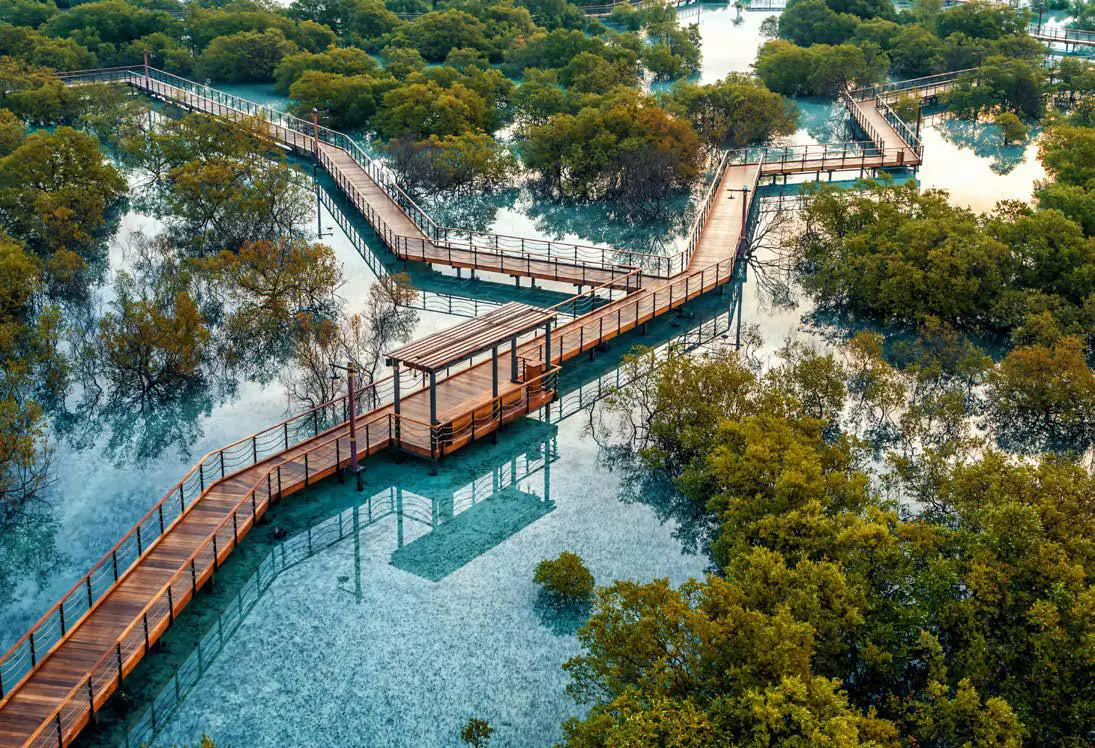
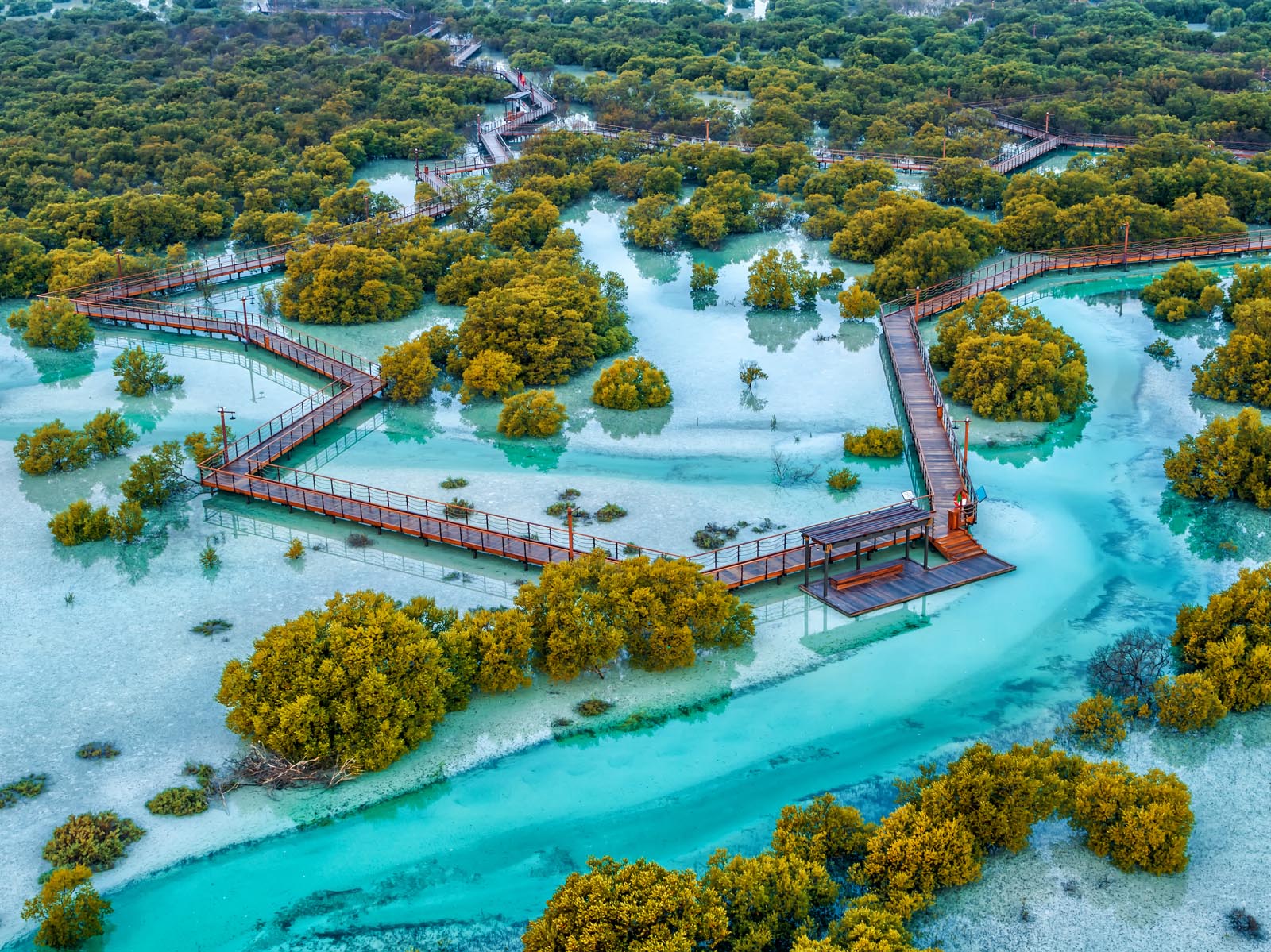
The heart of the park is the Mangrove Boardwalk. This raised wooden path stretches for about 2 kilometers, winding through dense mangrove forests and shallow lagoons. The boardwalk is fully accessible for wheelchairs and strollers.
Along the walk, you’ll find viewing platforms, shaded benches, and educational signs. These signs explain how mangroves grow, why they matter, and what wildlife you might see. The boardwalk is a favorite spot for early morning and sunset walks.
Floating Platforms And Viewing Towers
The park includes several floating platforms where you can stop and look at the water. There are also two tall viewing towers, which offer panoramic views of the mangroves and the surrounding islands. Photographers and bird watchers often use these towers to spot rare species.
Visitor Center And Amenities
Near the entrance, the Visitor Center welcomes guests with displays and interactive exhibits. There are clean restrooms, a café, souvenir shop, and a small playground for kids. The café serves snacks and drinks, with a menu focused on eco-friendly choices.
Guided Tours And Activities
Jubail Mangrove Park offers guided walks led by trained rangers. There are also kayak tours, yoga sessions, and school programs for groups. These activities are designed to teach visitors about mangroves and the importance of conservation.
Comparison: Jubail Mangrove Park Vs. Other Nature Parks
To help you understand how Jubail Mangrove Park stands out, here is a simple comparison with two other popular UAE nature parks:
| Park Name | Main Feature | Area Size | Activities | Accessibility |
|---|---|---|---|---|
| Jubail Mangrove Park | Mangrove forests | 1 million m² | Boardwalk, kayaking, tours | Wheelchair-friendly |
| Al Wathba Wetland Reserve | Flamingos, salt flats | 5 km² | Bird watching, walking trails | Limited access |
| Saqr Park (Ras Al Khaimah) | Urban park, playgrounds | 0.2 km² | Picnics, children’s rides | Fully accessible |
As you can see, Jubail Mangrove Park is unique because it combines nature, education, and accessibility.
The Importance Of Mangroves
Mangroves are trees and shrubs that grow in salty water along the coast. They are not only beautiful but also vital for the environment. Here’s why:
- Coastal Protection: Mangroves act as natural barriers. Their roots hold the soil and prevent erosion. They protect Abu Dhabi’s coastline from storms and rising sea levels.
- Wildlife Habitat: Mangrove forests provide shelter for fish, crabs, birds, and insects. Some species are found only in mangroves.
- Living Heritage: Some UAE mangroves are centuries old. At the Khor Kalba Mangrove Centre in Sharjah, you can walk among trees more than 300 years old.
- Carbon Capture: Mangroves absorb large amounts of carbon dioxide from the air. They help fight global warming more efficiently than most other plants.
- Water Quality: The roots filter water, trapping pollutants and improving quality in nearby lagoons and sea.
Many people do not realize that mangroves are more effective at storing carbon than tropical rainforests. This is a key reason why their protection is so important in the UAE and worldwide.
Wildlife At Jubail Mangrove Park
One of the best parts of visiting Jubail Mangrove Park is seeing the wildlife. The park is home to many creatures, both big and small. Here are some examples:
Birds
Bird watching is a highlight at Jubail Mangrove Park. Over 60 bird species have been recorded here. You might spot:
- Greater Flamingos
- Western Reef Herons
- Kingfishers
- Egrets
- Sandpipers
Rare migratory birds sometimes visit the park, especially in winter. The towers and platforms give you a good chance to see them without disturbing their habitat.
Marine Life
Under the water, the mangroves are full of life. Look out for:
- Mud crabs
- Fish fry (young fish)
- Mullet
- Oysters
- Shrimps
Many of these creatures use the roots as a nursery, where they are safe from bigger predators.
Other Animals
You may also see:
- Gazelles (occasionally, near the outer edges)
- Butterflies
- Dragonflies
- Small reptiles
Some animals are shy and only come out early in the morning or late afternoon. Patience and quiet observation can reward you with rare sightings.

Activities And Experiences
Jubail Mangrove Park is designed for both relaxation and learning. Here’s what you can do during your visit:
Walking And Bird Watching
The boardwalk is the main attraction. Walking slowly lets you enjoy the peace and spot wildlife. Early mornings and evenings are the best times for bird watching.
Kayaking
For a closer view of the mangroves, join a guided kayak tour. These tours last about 1–2 hours and are safe for beginners. You paddle through narrow channels, sometimes spotting fish and birds up close.
Educational Tours
Rangers lead tours for schools, families, and visitors. These tours explain how mangroves grow, their role in the ecosystem, and how you can help protect them.
Yoga And Fitness
Some mornings, the park hosts yoga sessions and fitness classes. Practicing yoga in the fresh air, surrounded by nature, is a unique experience.
Photography
Nature photographers love the park. The changing light, reflections in the water, and rare birds make for great photos. There are rules to protect wildlife, so always ask if you plan to use professional equipment.
Table: Activity Options And Details
Here is a summary of the main activities available at Jubail Mangrove Park:
| Activity | Duration | Age Limit | Booking Required | Price Range |
|---|---|---|---|---|
| Boardwalk walk | 30–90 min | None | No | Free–AED 15 |
| Kayak tour | 1–2 hours | 6+ | Yes | AED 80–120 |
| Guided educational tour | 45 min | None | Yes | AED 20–40 |
| Yoga session | 1 hour | 12+ | Yes | AED 50–70 |
Conservation Efforts And Environmental Impact
Jubail Mangrove Park is not just a tourist spot—it is a hub for conservation. The park’s main mission is to protect mangroves and teach people why they matter. Here are some of the ways the park helps the environment:
Restoration Projects
The park runs planting projects to grow new mangroves. Visitors and school groups can join these activities. This helps restore areas where mangroves have been lost due to development or pollution.
Research And Monitoring
Scientists use the park to study mangroves, water quality, and wildlife. They track bird populations and measure how much carbon the mangroves store. This research helps guide future conservation work in Abu Dhabi.
Waste Management
Jubail Mangrove Park is nearly plastic-free. Visitors are encouraged to bring reusable bottles and avoid littering. Staff regularly clean the boardwalk and water channels.
Community Engagement
The park hosts events for World Mangrove Day and other environmental holidays. These events include talks, workshops, and guided walks. By involving the community, the park builds lasting support for conservation.
Comparison: Mangrove Conservation In The Uae Vs. Other Countries
Mangrove conservation is not unique to Abu Dhabi. Here is a quick comparison of how the UAE’s efforts stack up against other countries:
| Country | Protected Mangrove Area | Main Conservation Activities | Threats |
|---|---|---|---|
| UAE | ~150 km² | Planting, research, education | Urbanization, pollution |
| Australia | ~10,000 km² | Restoration, strict laws | Oil spills, development |
| India | ~4,500 km² | Community projects, eco-tourism | Illegal logging, agriculture |

The UAE’s mangrove parks are smaller but focused on education and research. Jubail Mangrove Park is leading the way in showing how urban areas can protect nature.
Practical Tips For Visitors
If you plan to visit Jubail Mangrove Park, a few tips will make your trip smooth and enjoyable:
- Best Time to Visit: Early mornings and late afternoons are cooler and offer better wildlife sightings.
- Dress Comfortably: Wear light clothes and comfortable shoes. Bring a hat and sunscreen, as some areas are exposed.
- Bring Binoculars: If you love bird watching, binoculars will help you see rare species.
- Respect Nature: Stay on the boardwalk and do not touch plants or animals. Avoid loud noises.
- Book Activities Early: Kayak tours and guided walks can fill up fast, especially on weekends.
- Check Park Hours: The park is usually open from 7:00 AM to 9:00 PM, but hours may change during Ramadan or summer.
- Parking and Access: There is free parking near the entrance, but spaces can be limited during peak times.
- Food and Drink: The café offers drinks and snacks, but you can also bring your own water and light snacks.
- Photography: Use only your phone or basic cameras unless you have permission for professional gear.
- Weather: Check the forecast before visiting. The boardwalk can be slippery if it rains.
Many beginners miss the importance of respecting quiet zones. Birds and marine animals are sensitive to noise. Staying calm and moving slowly will help you see more wildlife.
How Jubail Mangrove Park Supports Sustainability
The park’s impact goes beyond the local area. Here’s how Jubail Mangrove Park supports sustainability:
- Education: Every visitor leaves with a better understanding of mangroves and climate change.
- Eco-friendly Design: The boardwalk uses recycled materials. Solar panels provide power for lights and the visitor center.
- Local Community Jobs: The park employs local guides, café staff, and rangers, supporting the economy.
- Tourism Balance: By limiting visitor numbers and promoting guided tours, the park avoids overcrowding and damage.
Most tourists do not realize that even a single mangrove tree can store over 300 kg of carbon in its roots and soil. Visiting the park helps support these efforts.
The Future Of Jubail Mangrove Park
Jubail Mangrove Park is still growing. The government plans to expand the boardwalk, add more educational programs, and build new viewing platforms. There are also plans to connect the park with other green spaces on Jubail Island.
The park is becoming a model for nature tourism in the Middle East. Other cities are looking at Jubail Mangrove Park as an example of how to combine recreation, education, and conservation.
Continue your Abu Dhabi day at the beaches of Abu Dhabi, the Sheikh Zayed Grand Mosque, or join one of our Abu Dhabi tours from Dubai.
Frequently Asked Questions
What Are Mangroves And Why Are They Important?
Mangroves are trees and shrubs that live in salty coastal water. They protect the shoreline, support wildlife, and absorb carbon dioxide. Mangroves are vital for fighting climate change and keeping oceans clean.
How Much Does It Cost To Visit Jubail Mangrove Park?
Entry to the park is free or costs up to AED 15 per person, depending on the season. Guided tours and kayak activities are extra and must be booked ahead. Prices range from AED 20 to AED 120.
Can I Bring Children And Elderly Visitors?
Yes, the park is designed for all ages. The boardwalk is wheelchair-friendly and safe for strollers. There is a playground for kids and plenty of benches for rest.
Are Pets Allowed In The Park?
No, pets are not allowed. This rule helps protect the wildlife and keep the park clean.
How Can I Support Mangrove Conservation?
You can support by visiting the park, joining planting events, spreading awareness, and donating to conservation groups. Learn more about mangroves on reputable sites like Wikipedia.
Jubail Mangrove Park is a special place in Abu Dhabi. It is more than a nature walk—it is a lesson in sustainability, conservation, and the value of quiet beauty. Whether you are a local, a tourist, or a student, the park offers a rare chance to connect with nature and help protect it for the future.
Enjoying our content? Make us a preferred source on Google.
Add us as a Preferred Source on Google