
Qasr Al Hosn Abu Dhabi: A Complete Guide to the City’s Oldest Landmark
For centuries, the heart of Abu Dhabi has beat within the walls of Qasr Al Hosn. This iconic fort tells the story of the city’s transformation—from a modest fishing village to a thriving global capital. Today, Qasr Al Hosn stands not only as a monument to history, but also as a living museum, a cultural hub, and a symbol of Emirati identity. If you want to understand Abu Dhabi’s roots, a visit to Qasr Al Hosn is essential.
This article covers everything you need to know about Qasr Al Hosn: its history, architecture, restoration, exhibits, events, visitor information, and practical tips. Whether you are a tourist, a resident, or someone curious about the UAE’s past, you’ll find clear answers and helpful details.
Table of Contents
The History Of Qasr Al Hosn in Abu Dhabi
Qasr Al Hosn’s story begins in the late 18th century. Around 1790, Abu Dhabi’s ruling family built a watchtower to protect the only freshwater well on the island. This simple stone structure became the foundation for a fort that would later be known as Qasr Al Hosn.
As Abu Dhabi grew, so did the fort. In the 19th century, it expanded into a larger complex, serving as the home of the Al Nahyan family, the rulers of Abu Dhabi. The fort was a political, military, and social center. It witnessed negotiations, celebrations, and even conflicts. For more than 200 years, Qasr Al Hosn was the seat of government and the place where important decisions shaped the emirate.
Important Dates
- 1790: Original watchtower constructed
- 1930s: Major expansion during oil exploration
- 1966: Government moved to new buildings; fort became symbolic
- 2018: Qasr Al Hosn reopened after restoration
The fort’s survival is remarkable. Abu Dhabi’s rapid modernization could have erased old structures, but Qasr Al Hosn remained, adapting to new roles and standing as a reminder of the city’s origins.
Architectural Features
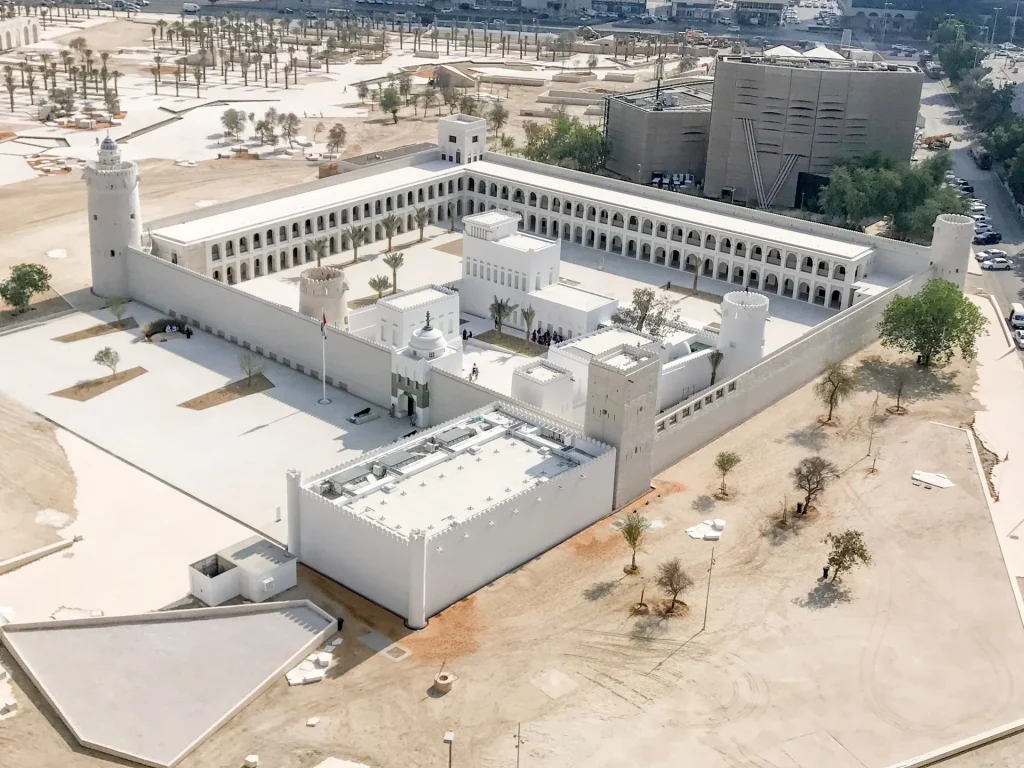
Qasr Al Hosn is a unique mix of traditional Emirati design and later influences. Its architecture reflects the region’s climate, resources, and cultural values.
Layout And Structure
The fort is rectangular, with four large towers at each corner. Its thick walls are made from coral stones, seashells, and sand, materials that provide insulation against the desert heat. Narrow windows, shaded courtyards, and wind towers help keep the interior cool.
The central watchtower is the oldest part of the building. Over time, rooms were added for administration, living quarters, and storage. The design is simple but effective, with spaces organized around communal courtyards.
Restoration Techniques
During the latest restoration, traditional methods were used alongside modern technology. Workers sourced coral stones and lime mortar similar to original materials. This approach preserved the fort’s authenticity while ensuring its stability.
| Feature | Original Material | Restoration Material |
|---|---|---|
| Walls | Coral stone, sand | Coral stone, lime mortar |
| Floors | Compressed earth | Modern stone, earth mix |
| Roof | Palm trunks, fronds | Palm trunks, treated wood |
Non-obvious Insight
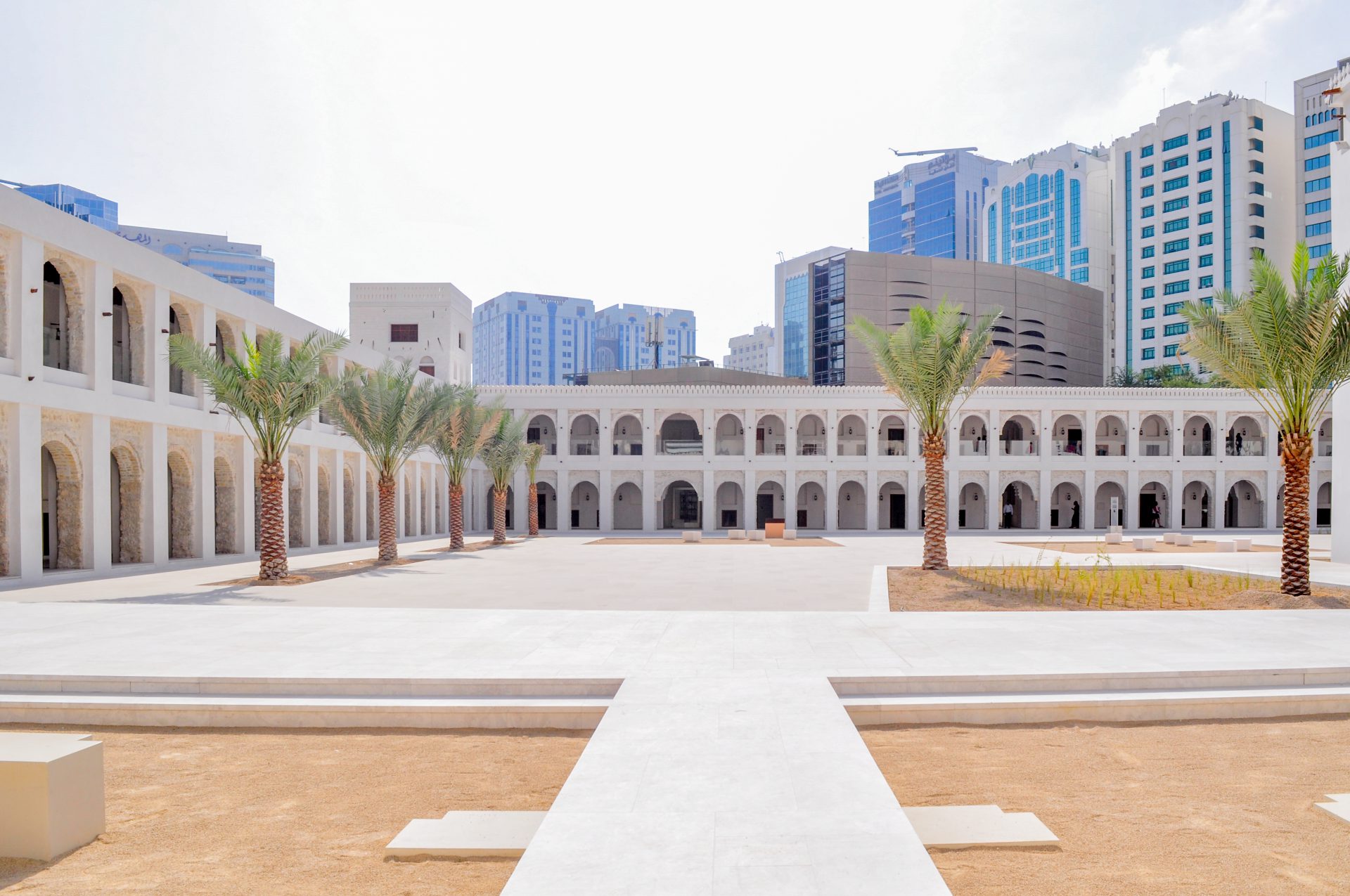
Many visitors overlook how the fort’s architecture was adapted for social gatherings. Courtyards were not just for cooling—they hosted majlis (community meetings), weddings, and poetry sessions. The design encouraged interaction, making Qasr Al Hosn both a fortress and a home.
Qasr Al Hosn Today
After years of careful restoration, Qasr Al Hosn opened to the public in 2018 as a museum and cultural center. Its grounds now include:
- The restored fort itself
- The Cultural Foundation (an arts and events space)
- The House of Artisans (showcasing Emirati crafts)
- Open gardens and plazas
Visitors can walk through rooms that once held rulers and ministers, view historical artifacts, and enjoy modern exhibitions. Qasr Al Hosn is more than a museum; it’s a place where history and culture come alive.
Museum Exhibits
The museum inside Qasr Al Hosn displays artifacts, photos, and documents that tell Abu Dhabi’s story. Notable exhibits include:
- Pearl diving tools: Reminders of the region’s economic past
- Old maps: Showing Abu Dhabi’s growth
- Royal family portraits: Connecting visitors to rulers
- Traditional weapons: Used for defense

Interactive displays let guests try calligraphy, listen to oral histories, and explore virtual reconstructions.
Cultural Foundation
Next to the fort, the Cultural Foundation offers art galleries, a library, and performance spaces. It hosts regular exhibitions, workshops, and concerts.
House Of Artisans
This space teaches and demonstrates Emirati crafts. You can watch artisans weave Al Sadu (wool textiles), craft baskets, or make traditional jewelry. The House of Artisans also offers classes for visitors.
Events And Activities
Qasr Al Hosn is not just a static monument. It is a venue for festivals, educational programs, and community gatherings. Throughout the year, the site hosts:
- Qasr Al Hosn Festival: An annual event celebrating Emirati heritage, with music, dance, and food
- Workshops: Ranging from pottery to storytelling
- Live performances: Traditional music, poetry, and theater
- School tours: Educational programs for students
These activities bring the fort to life, allowing visitors to experience customs firsthand.
Common Mistake
Some tourists visit only for photos and miss scheduled events or workshops. Checking the calendar before your visit ensures you don’t miss unique cultural experiences.
Visitor Information
Planning a trip to Qasr Al Hosn is straightforward, but a few practical tips help you make the most of your visit.
Location And Accessibility
Qasr Al Hosn is in the center of Abu Dhabi, on Sheikh Rashid Bin Saeed Al Maktoum Street. It is easy to reach by car, taxi, or public bus. The site is wheelchair accessible, with ramps and elevators.
Opening Hours
- Sunday to Saturday: 10 am – 7 pm
- Fridays: 2 pm – 7 pm
Hours may change during Ramadan and public holidays.
Entry Fees
| Visitor Type | Entry Fee |
|---|---|
| Adults | 55 AED |
| Children (under 12) | Free |
| Students | 30 AED |
| Senior Citizens (60+) | Free |
Tickets can be bought online or at the entrance. Guided tours are available for an extra fee.
Facilities
- Restrooms: Modern, clean, and accessible
- Cafés: Offer Emirati and international snacks
- Gift shop: Local crafts and souvenirs
- Wi-Fi: Free for visitors
Practical Tips
- Dress modestly. The site is a cultural landmark.
- Bring sunscreen. Outdoor areas can be hot.
- Check event schedules. You might catch a workshop or festival.
- Allow 2-3 hours. There is much to see.
- Photography is allowed in most areas, but respect signs.
The Role Of Qasr Al Hosn In Emirati Identity
Qasr Al Hosn is more than stone and mortar. It is a symbol of the UAE’s resilience, leadership, and unity. The fort was the birthplace of Abu Dhabi’s government, and its walls witnessed the signing of treaties, the birth of leaders, and the celebration of national milestones.
Education And Heritage
Schools across the UAE bring students to Qasr Al Hosn to learn about their history. Storytellers and guides share tales of pearl divers, merchants, and rulers. The fort inspires pride and teaches values like hospitality, courage, and wisdom.
Comparison With Other Uae Landmarks
Qasr Al Hosn stands apart from other famous sites in the UAE. Here’s a quick comparison:
| Landmark | Location | Year Built | Main Purpose |
|---|---|---|---|
| Qasr Al Hosn | Abu Dhabi | 1790 | Government, residence |
| Al Fahidi Fort | Dubai | 1787 | Defense, museum |
| Al Jahili Fort | Al Ain | 1891 | Military, residence |
While Dubai’s Al Fahidi Fort houses a museum, and Al Ain’s Al Jahili Fort was built for defense, Qasr Al Hosn was the center of governance—a rare role for a fort in the region.
Conservation And Challenges
Preserving Qasr Al Hosn was not simple. Abu Dhabi’s climate, urban growth, and changing cultural attitudes all posed challenges.
Restoration Process
The restoration project took almost a decade. Experts studied old photos, documents, and oral histories to guide their work. They balanced authenticity with safety, using both old and new materials.
Environmental Factors
- Humidity: Damages coral stone
- Sandstorms: Erode surfaces
- Urban development: Threatened the site’s visibility

To protect the fort, authorities created buffer zones and planted gardens to reduce sand and heat.
Community Involvement
Local families, historians, and craftsmen played key roles. Their knowledge ensured the fort’s restoration was accurate. This engagement also deepened community connection to Qasr Al Hosn.
Non-obvious Insight
Few realize that restoration included reviving ancient crafts. For example, palm weaving and coral stone cutting were taught to new generations, preserving not just the building but traditional skills.
The Visitor Experience: What Sets Qasr Al Hosn Apart
Many museums show artifacts behind glass. Qasr Al Hosn offers more. You can walk through rooms, touch walls, and feel the history. The atmosphere is quiet and respectful, but not distant. Guides answer questions, artisans demonstrate crafts, and performers share stories.
Authenticity
Unlike modern attractions, Qasr Al Hosn is rooted in real history. Its walls are original, its layout unchanged. This authenticity makes the visit special.
Interactivity
Hands-on exhibits and live demonstrations mean you don’t just see history—you experience it.
Accessibility
The site welcomes families, students, and tourists of all backgrounds. Everything is labeled in both Arabic and English, with audio guides available.
Emotional Impact
Many visitors report feeling moved by the fort’s atmosphere. Seeing where rulers lived and worked creates a personal connection to the UAE’s story.
Planning Your Visit
If you are considering a trip, here’s how to make the most of your time.
Best Times To Visit
- Morning: Cooler, less crowded
- Festival periods: More events, but busier
- Weekdays: Quieter than weekends
Guided Tours
Guided tours are available in Arabic and English. They last about 45 minutes and cover the fort’s history, architecture, and exhibits. Guides share anecdotes and answer questions, making the visit richer.
Family-friendly Activities
Kids can join craft workshops, treasure hunts, and storytelling sessions. The site is safe and easy to navigate with strollers.
Photography Tips
The fort’s white walls and blue sky create striking photos. Early morning or late afternoon light is best. For portraits, use the courtyards as a backdrop.
Nearby Attractions
After visiting Qasr Al Hosn, you can explore:
- Corniche: Beautiful waterfront promenade
- Heritage Village: A recreated traditional settlement
- Emirates Palace: Luxury hotel and architectural marvel
Qasr Al Hosn In The Media And Popular Culture
Qasr Al Hosn often appears in documentaries, travel shows, and books about Abu Dhabi. It is featured in UAE National Day celebrations and has hosted international artists and dignitaries.
Media Highlights
- Documentaries about Emirati history
- Interviews with restoration experts
- Coverage of festivals and royal events
Cultural References
Emirati poets and writers mention Qasr Al Hosn as a symbol of unity and endurance. The fort’s silhouette appears on stamps and official documents.

Frequently Asked Questions
What Is Qasr Al Hosn?
Qasr Al Hosn is Abu Dhabi’s oldest stone building and a former royal residence. It served as the seat of government and the home of the ruling Al Nahyan family.
How Long Does A Visit To Qasr Al Hosn Take?
Most visitors spend 2 to 3 hours exploring the fort, museum, and artisan workshops. Guided tours last about 45 minutes, but you can stay longer for events or exhibitions.
Is Qasr Al Hosn Suitable For Children?
Yes, Qasr Al Hosn is family-friendly. There are interactive exhibits, craft workshops, and storytelling sessions designed for kids. The site is safe and easy to walk.
Are There Guided Tours Available?
Guided tours are offered daily in Arabic and English. Tours cover the history, architecture, and cultural stories. You can book at the entrance or online.
How Can I Buy Tickets For Qasr Al Hosn?
Tickets can be purchased online or at the entrance. Discounts are available for students and senior citizens. For more details, visit the official site: Qasr Al Hosn Official Website.
Qasr Al Hosn is more than a historical site—it’s a living symbol of Abu Dhabi’s journey. Its walls hold stories of leadership, resilience, and culture. Whether you are interested in architecture, history, or simply want a deeper understanding of the UAE, Qasr Al Hosn offers a rich and memorable experience.
The fort’s blend of tradition and modernity continues to inspire visitors from around the world.
Enjoying our content? Make us a preferred source on Google.
Add us as a Preferred Source on Google